US Gas Scores a Win as TotalEnergies Ships First Mexico Pacific LNG Cargo to Asia
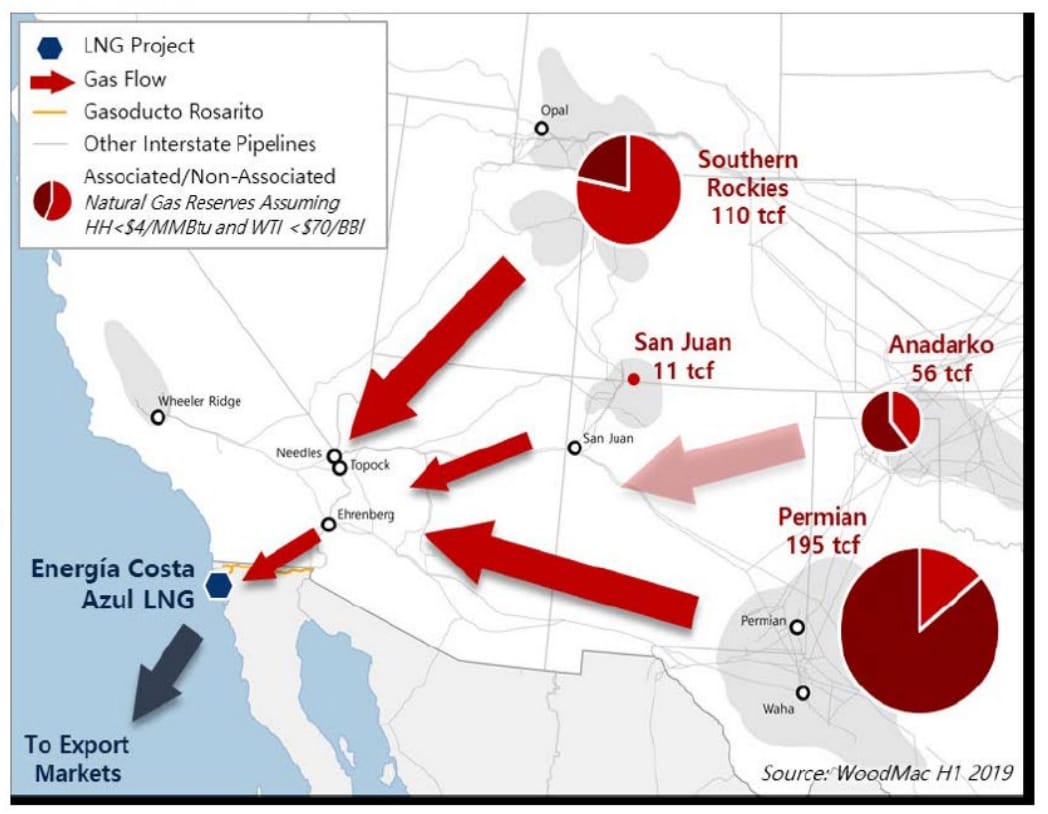
TotalEnergies shipped the first liquefied natural gas cargo from the ECA (Energía Costa Azul) LNG Phase 1 terminal on Mexico's Pacific coast on July 9, 2026, sending it toward Asian buyers while the facility works through its commissioning stage. The plant sits north of Ensenada in Baja California and is the first LNG export terminal ever to operate on Mexico's Pacific coastline. Sempra Infrastructure (the US energy infrastructure company headquartered in Houston, Texas) runs the facility, while TotalEnergies holds a 16.6 percent stake and acts as the only buyer of output during the ramp-up period.
The single-train liquefaction unit carries a nameplate capacity of 3.25 million tonnes per year. It draws its feed gas from the Permian Basin in Texas and New Mexico, then liquefies that supply for seaborne export. Because the terminal was built alongside an existing regasification plant, the partners reused storage tanks and the marine berth to hold down construction costs. A larger second phase, expected to add close to 12 million tonnes per year across two trains, is under development at the same site.
The July 9 shipment is one of the early cargoes leaving the terminal during its ramp-up phase, in which TotalEnergies acts as the sole offtaker. Sempra has said full commercial operations should begin in the fall. Once that milestone is reached, TotalEnergies will lift 1.7 million tonnes per year for 20 years under a long-term contract, and Mitsui holds a separate long-term deal, bringing the combined committed volume to 2.5 million tonnes per year.
The timing matters for global gas flows. Roughly 20 percent of the world's LNG normally moves through the Strait of Hormuz, and that channel has stayed largely blocked since late February 2026, when the United States and Israel opened an air war against Iran. QatarEnergy declared force majeure on its LNG shipments on March 4, 2026, after attacks on its Ras Laffan facilities, cutting off a supply line that Asian and European buyers had long depended on. As of July 11, 2026, transits through the strait remain far below normal, with only a few dozen vessels crossing each day against a pre-war average near 88 per day, and fresh ship strikes in early July have kept war-risk premiums elevated.
Asian importers have felt the squeeze most sharply because many of them hold limited domestic LNG storage. Japan, South Korea, and China all rely heavily on Gulf cargoes, and the prolonged closure has pushed them to chase Atlantic Basin supply at higher prices and over longer sailing distances. A new source on North America's Pacific coast eases part of that pressure, since cargoes loaded in Baja California reach Asian ports by the shortest maritime route and avoid both the Strait of Hormuz and the Panama Canal.
For TotalEnergies, the start-up reinforces its position as the world's third largest LNG player, with a portfolio of 44 million tonnes in 2025. The company aims to raise natural gas toward roughly half of its sales mix by 2030. For Sempra, the first cargo marks the payoff of a project that reached a final investment decision in 2020 and became the first Mexican terminal to secure an LNG export permit.
The wider market backdrop stays tense. Analysts expect Pacific coast liquefaction to gain strategic weight for as long as the Hormuz route stays unreliable, and buyers across Asia are likely to keep diversifying away from Gulf-dependent supply. ECA LNG Phase 1 will not replace the volumes stranded by the Hormuz closure on its own, yet its entry into service shows how quickly LNG trade patterns are shifting toward routes that sidestep the Middle East chokepoint.
💡 Alternative Solution
Pacific Basin LNG routes that bypass the Strait of Hormuz, expansion of North American west coast liquefaction capacity including ECA LNG Phase 2, diversification of LNG supply away from Gulf-dependent sources, rerouting of US Gulf Coast cargoes via the Cape of Good Hope, drawdown of strategic gas reserves, and long-term offtake agreements to secure reliable volumes